“We paid an SEO company for six months and I honestly couldn’t tell you what they did.”
I hear some version of that sentence almost every week. A business owner in Melbourne spent thousands of dollars, got a monthly report full of graphs and numbers, and at the end of it all, couldn’t point to a single new customer that came from it.
The SEO industry has a transparency problem. Too many providers hide behind jargon, deliver reports nobody reads, and rely on the fact that most business owners don’t know enough about SEO to ask the right questions. That works until the contract runs out and the client realises nothing changed.
This guide is the plain-language version of what SEO services actually involve, what you should expect, and how to tell if what you’re paying for is working. If your business is in Melbourne and you’ve been burned by an SEO provider before, or you’re thinking about hiring one for the first time, this is where I’d start.
If you’re specifically looking for help with local rankings in your suburb, our local SEO Melbourne guide covers that in detail. If Google Ads is more your speed, we’ve got a separate guide for that.
What SEO services actually include
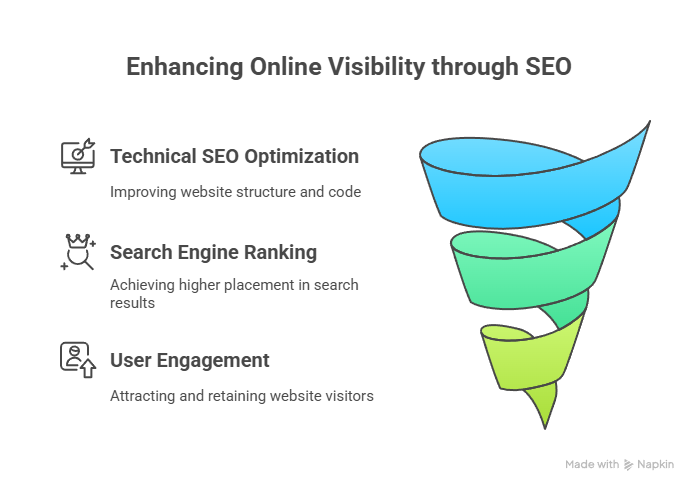
SEO breaks down into three areas. Technical SEO, on-page SEO, and off-page SEO. Most agencies bundle all three together, which is fine as long as you know what each one involves.
Technical SEO is about making sure Google can find and read your website properly. Things like site speed, mobile responsiveness, crawl errors, broken links, XML sitemaps, and structured data. Think of it as the plumbing of your website. Nobody sees it when it works, but when it breaks, nothing else matters.
We go deeper on technical audits in our guide on technical SEO audits.
On-page SEO is about the content on your website. Page titles, headings, the actual words on the page, internal links between pages, image alt text, and meta descriptions. This is where keyword research meets content creation. The goal is to make sure every page on your site is targeting a specific search term and answering the question behind that search better than your competitors.
Our guide on on-page SEO covers the mechanics of this in more detail.
Off-page SEO is everything that happens away from your website. Mostly that means links from other websites pointing to yours. Google treats these like votes of confidence. The more quality links you have from real, relevant websites, the more authority your site has in Google’s eyes.
How to know if your current SEO is working
Before you hire anyone or change anything, you need a baseline. Here’s how to check where you stand right now, in about twenty minutes.
Open Google Search Console. If you don’t have it set up, stop reading and go do that first. It’s free and it’s the single most useful tool for understanding how Google sees your website.
Look at your total impressions and clicks over the last three months. Are they trending up, down, or flat? If they’re flat or declining, something needs to change. If they’re going up, whatever you’re doing is working and you should probably do more of it.
Now look at the specific queries people are finding you for. Are they relevant to your business? If you’re a Melbourne accountant and your top queries are all about accounting software reviews, you’re attracting the wrong audience.
Finally, check for technical issues. Search Console has a section called “Page indexing” that tells you how many pages Google has indexed versus how many it found but chose not to index. If a lot of pages aren’t being indexed, there’s likely a technical problem.
For a more thorough health check, a proper SEO audit will catch things that Search Console doesn’t surface.
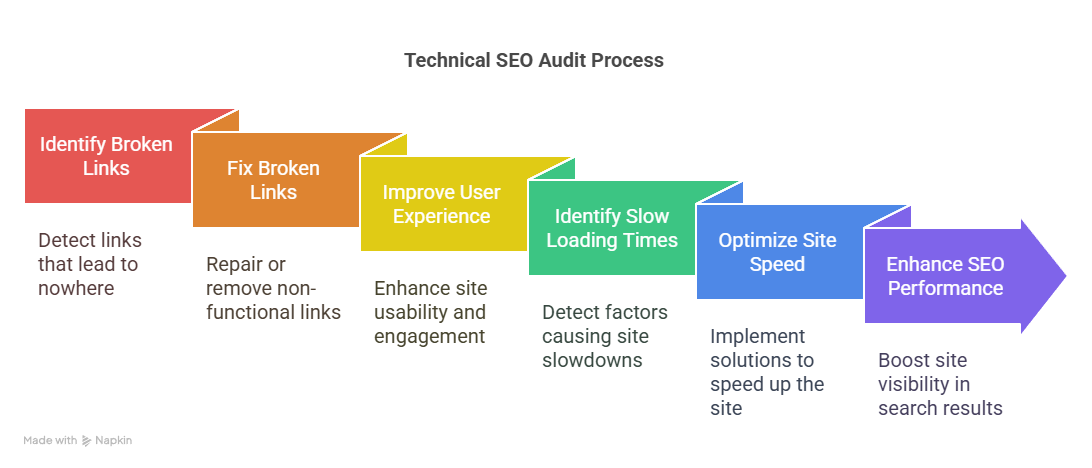
The SEO audit: where every engagement should start
Any SEO provider worth hiring should start with an audit. Not a sales pitch disguised as an audit. A proper look under the bonnet that tells you exactly what’s working, what’s broken, and what the priorities should be.
A good audit covers technical health, including crawl errors, page speed, mobile usability, and Core Web Vitals. It covers on-page issues like missing title tags, thin content, duplicate content, and internal linking gaps. And it covers off-page factors like your backlink profile and how it compares to competitors.
The output should be a clear list of issues ranked by priority, not a hundred-page document designed to overwhelm you into signing a contract. If someone hands you a report and you can’t understand what the top three priorities are within five minutes, the report isn’t for you. It’s for them.
I was speaking to a client recently who’d received a 47-page audit from another provider. I asked her what the main finding was. She had no idea. That’s not an audit. That’s a filing cabinet. At some point, you’re just picking gnat shit out of pepper instead of telling the business owner what to fix first.
What good SEO reporting looks like
Every month, you should be able to answer three questions in two minutes: What happened? Is it working? What’s next?
Your SEO provider’s report should make that easy. Here’s what belongs in it: organic traffic this month compared to last month and the same month last year. Keyword rankings for your target terms, with movement shown. Leads or enquiries that came from organic search. Work completed this month. Plan for next month.
That’s it. Anything beyond that is nice to have but not essential. If your current provider sends you a report that runs to thirty pages and you’ve never read past page two, that report isn’t doing its job. Sound familiar?

How long SEO takes (the honest version)
Three months before you can make a fair call on whether it’s working. Six months before you see meaningful results for competitive terms. Twelve months before SEO becomes your most cost-effective marketing channel.
Anyone who promises you page-one rankings in thirty days is either lying or targeting keywords nobody searches for. Both are a waste of your money.
The reason it takes time is that Google needs to crawl your changes, evaluate them against competitors, and decide whether your content deserves to rank higher. For a new website or one that’s never had SEO work done, there’s a lot of ground to make up.
Here’s the thing that makes it worth the wait. Paid ads stop the moment you stop paying. SEO compounds. A page you rank today can bring in traffic for years without any additional spend. The ROI curve is slow to start and very steep once it gets going.
Choosing an SEO agency in Melbourne
I’m going to give you the same questions I’d ask if I were hiring someone to do our SEO. Including us.
What does month one look like? If the answer doesn’t include an audit, walk away. Any provider that starts optimising before they understand what’s broken is guessing.
Who does the actual work? Is it an in-house team? Freelancers? Are they outsourcing to a white label provider? None of these are inherently bad, but you should know. If you want to understand the white label model, our white label SEO guide explains how that works.
How do you build links? This is the question that separates good providers from dangerous ones. If they talk about “proprietary link networks” or can’t explain where the links come from, that’s a risk to your domain. Bad links can result in a Google penalty that takes months to recover from.
Can you show me results from a Melbourne business similar to mine? Case studies from international brands don’t tell you anything about what they’ll do for your business. You want to see results from businesses roughly your size, in your market. Our guide on finding the right SEO agency in Melbourne goes deeper on what to look for.
What happens if I want to leave? Check the contract terms. Some agencies lock you in for twelve months with no exit clause. Others do month-to-month. Your confidence in the relationship should determine which one you’re comfortable with.
SEO management services from MaxBiz in Melbourne” src=”https://maxbiz.co/wp-content/uploads/2025/06/Get-the-Best-SEO-Management-Services-MaxBiz.png” />
SEO pricing in Melbourne: what’s reasonable
SEO pricing varies widely, and the cheapest option is almost never the best value. Here’s a rough guide to what different price points get you.
Under $500 per month: at this level, you’re getting very limited work. Maybe some basic technical fixes and a handful of on-page tweaks. Appropriate for a very small business with low competition and realistic expectations.
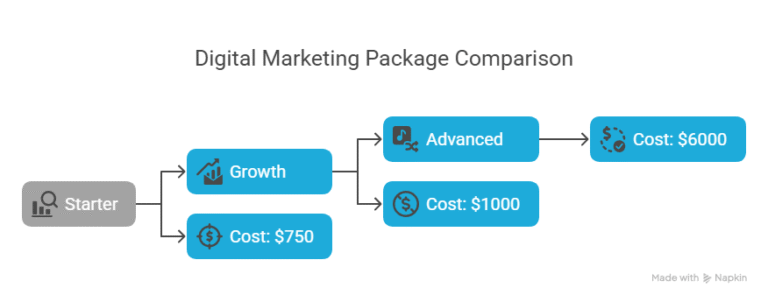
$1,000 to $2,500 per month: this is where most small to medium Melbourne businesses sit. At this level, you should expect a proper strategy, regular content creation, technical maintenance, and link building. Monthly reporting and at least fortnightly check-ins.
$2,500 and above: for businesses in competitive industries or targeting multiple service areas across Melbourne. More aggressive content production, broader link building, and often dedicated account management.
The key question isn’t “how much does it cost” but “what am I getting for it and how will I know it’s working.” If a provider can’t answer both of those clearly, the price is irrelevant.
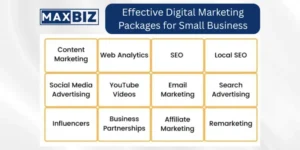
For small businesses exploring package options, our guide on digital marketing packages breaks down what different bundles typically include.
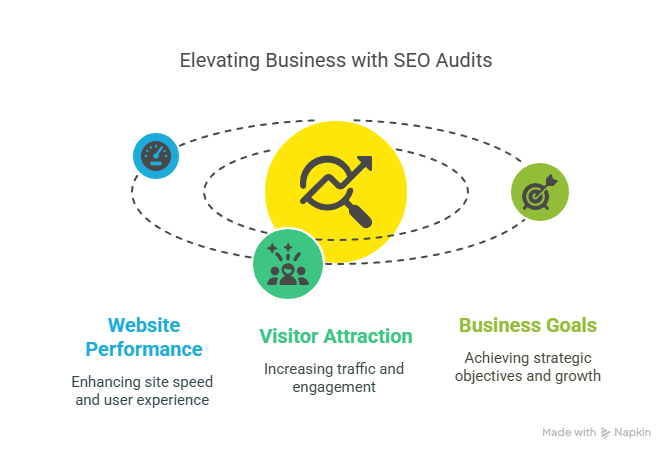
SEO and your other marketing channels
SEO doesn’t exist in isolation. It works best when it’s connected to your other marketing efforts.
Content marketing feeds SEO with fresh pages for Google to index. Our content marketing guide explains how to build a content strategy that supports your SEO goals.
Google Ads and SEO together cover both the paid and organic sections of the search results page. Running both means you’re visible whether someone clicks the ad or scrolls past it. Our Google Ads guide covers the paid side.
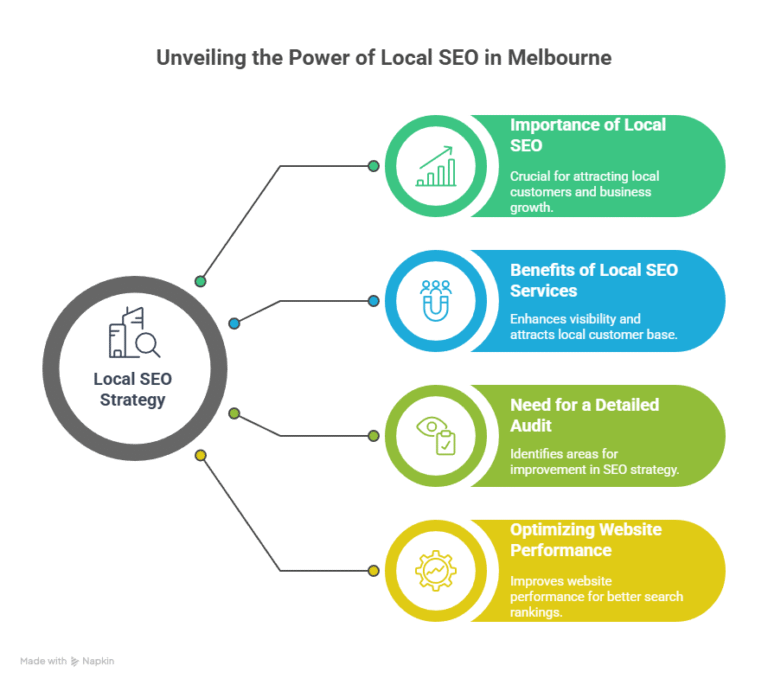
Local SEO targets the Map Pack and location-based searches. If your business serves a specific area, combining local SEO with broader SEO gives you the best coverage. See our local SEO Melbourne guide for the details. For suburb-specific examples, our guides on SEO services in Coburg and Brunswick and Brunswick SEO strategy show how this works at the neighbourhood level.
Social media drives traffic to your content, which signals to Google that people find it useful. Email marketing brings people back to your site, which also helps. None of these channels replace SEO, but they all make it work harder.
SEO is one part of the equation. If you want to see how it fits alongside Google Ads, content marketing, and the rest, our digital marketing company Melbourne guide explains what a full-service approach looks like and how to pick the right partner.
Now that you’ve got the framework
You know what SEO services involve, what good reporting looks like, how to evaluate a provider, and what a reasonable budget looks like for a Melbourne business. If you’re already working with someone and this guide made you want to ask them some harder questions, that’s a good sign.
If you want a second opinion on your current SEO, or if you’re starting from scratch and want someone to map out what your first six months should look like, we’re happy to have the conversation. See how our Melbourne SEO services work or get in touch — you know where to find us.