“We need to offer SEO, but we don’t have the team to deliver it.”
An agency owner in Sydney said that to me last year. He had three clients asking for SEO, a web designer on staff, and nobody who knew the difference between on-page optimisation and a Google Business Profile. He wasn’t going to hire a full-time SEO specialist for three clients. But he also wasn’t going to say no to the revenue.
That’s the gap white label SEO fills. It lets agencies offer SEO services under their own brand without building the team from scratch. Someone else does the work, your name goes on it, and your client never knows the difference. It’s not a new concept, but it’s one that a lot of agency owners either misunderstand or overcomplicate. This guide breaks down how it actually works, what to look for in a white label SEO partner, and where the whole thing can go sideways.
White label SEO is when an external provider handles SEO work on behalf of your agency. They do the keyword research, the technical audits, the on-page optimisation, the link building, the reporting. But everything is delivered under your brand. Your client sees your logo, your reports, your name. The provider stays invisible.

Think of it like a bakery that makes cakes for a cafe. The cafe sells the cake as their own. The bakery never talks to the customer. The cafe gets the credit, and the bakery gets paid for the work. White label SEO works the same way.
This matters because most agencies can’t afford to build a full SEO team in-house. An SEO strategist, a content writer, a technical specialist, and a link builder would cost north of $300,000 a year in salary alone. White label lets you access all of that capability for a fraction of the cost, scaled to how many clients you actually have.
Most providers package their white label SEO services into tiers. Understanding what’s in each tier saves you from paying for things you don’t need or, worse, selling your clients something that doesn’t get delivered properly.

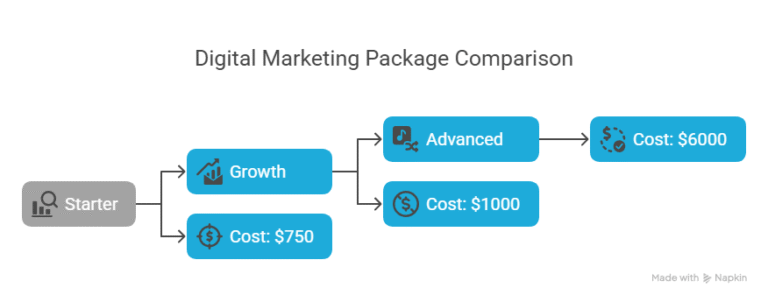
A basic package typically covers on-page SEO, keyword research, and monthly reporting. This is enough for small business clients with local visibility goals. If you want to understand the nuts and bolts of what white label SEO services include and their benefits, we’ve written a separate guide that goes deeper.
Mid-tier packages add content creation, link building, and technical SEO audits. This is where things get interesting for agencies that want to offer a comprehensive service. Content and links are the two hardest things to produce in-house at scale, so outsourcing them makes the most sense. For a closer look at the benefits of white label SEO at this level, that post breaks it all down.
Premium packages cover everything plus dedicated account management, custom dashboards, and strategy calls. You’re essentially getting an embedded SEO team that happens to sit outside your office. This level only makes sense if you have enough clients to justify the spend.
Choosing the wrong partner can damage your reputation faster than not offering SEO at all. Here’s what separates a reliable white label SEO partner from one that’ll leave you explaining bad results to your clients.

Transparent reporting. You should be able to see exactly what work was done each month. Not a summary. Not a dashboard with green arrows. Actual deliverables. Pages optimised, links built, content published. If they can’t show you the work, they’re probably not doing much of it.
Communication that doesn’t require chasing. A good partner responds within a business day. They flag issues before they become problems. They don’t disappear for two weeks and then send a report. If you want to dig into how to evaluate a white label digital marketing partner, we’ve covered the key criteria.
Scalability. You might start with two clients, but if you’re selling well, that could be ten within six months. Your provider needs to handle that without the quality dropping off a cliff. Ask how many clients they currently manage and what their capacity looks like.
Australian market knowledge. This matters more than people think. Ranking in Melbourne is different from ranking in Dallas. Local citations, Australian directories, suburb-level targeting, Google Business Profile optimisation for the Australian market. If your provider doesn’t understand this, your local clients will suffer. Our guide on white label SEO services in Australia covers why this distinction matters.
There are a few different ways the commercial relationship works, and it’s worth understanding them before you sign anything.
The most common model is a fixed monthly retainer per client. You pay the white label provider a set fee for each client they manage, and you charge your client whatever markup you decide. The gap is your margin. Simple.
Some providers work on a project basis. A one-off SEO audit, a website migration, a content sprint. This can work well if you don’t need ongoing SEO support for every client. For agencies looking at the white label SEO reseller model in Australia, that post explains how the pricing typically works.
Then there’s the hybrid model, where you pay a smaller base retainer plus per-project fees for additional work. This gives you flexibility but makes your margins harder to predict.
Whatever model you choose, make sure you understand what’s included and what costs extra. Ad hoc requests, additional reporting, strategy changes mid-month. These can add up if they’re not covered in your agreement.
Not all white label providers offer the same mix. Here’s what you should expect at a minimum, and what separates the serious operators from the ones who are just reselling someone else’s work.

Technical SEO audits. This is the foundation. Site speed, crawl errors, indexation issues, schema markup, mobile responsiveness. A proper audit should give you a prioritised list of what needs fixing and why. If you want the detail on white label SEO audit tools and what to expect from them, we’ve covered that separately.
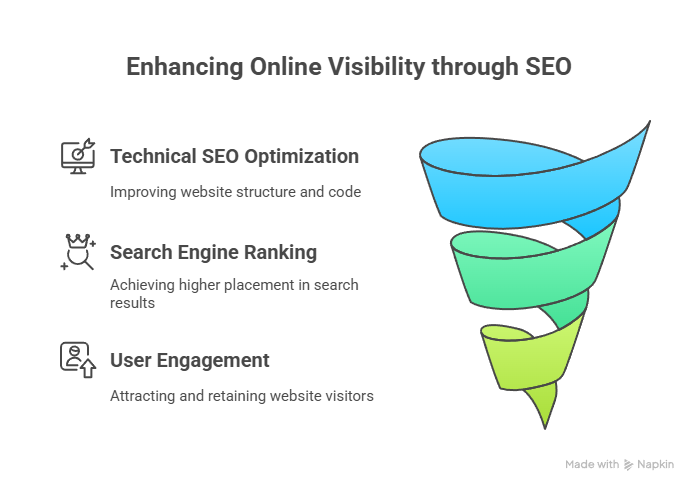
On-page optimisation. Title tags, meta descriptions, header structure, internal linking, content optimisation. This is the bread and butter of SEO delivery and where most of the early wins come from.
Content creation. Blog posts, landing pages, service pages. Content is what drives organic traffic over the long term. A good white label partner will write content that targets your client’s keywords and reads like a human wrote it, not a content farm.
Link building. Still one of the most important ranking factors and one of the hardest to do properly. Your provider should be building links from relevant, authoritative sites. Not directories. Not PBNs. Real links from real websites.
Local SEO. For agencies serving local businesses, this is non-negotiable. Google Business Profile management, local citations, review strategy, suburb-level content. Our guide on white label local SEO reseller services explains what a proper local SEO offering looks like under a white label arrangement.
Reporting. White-labelled reports with your logo, your colours, and your branding. The client should never see the provider’s name. Reports should be clear enough that a non-technical client can understand what happened and why it matters.
The biggest one is choosing on price alone. A provider charging $200 per client per month is not delivering the same quality as one charging $800. At $200, you’re getting template-based work, probably outsourced again to a third party. That’s white label of white label. The quality shows.
The second mistake is not understanding what’s being delivered. If your sales team is promising first-page rankings in three months but your provider is doing basic on-page work, you’ve got a gap that’s going to cause problems. Make sure what you’re selling matches what you’re buying.
Third, agencies forget to stay involved. White label doesn’t mean set and forget. You still need to review the work, understand the strategy, and be able to speak intelligently to your clients about what’s happening. The best white label relationships are partnerships, not handoffs.
If you’re weighing up whether to scale your agency through outsourcing, our guide on scaling your business with white label SEO in Australia goes into the growth angle in more detail.
Most agencies mark up white label SEO services by 50% to 100%. If your provider charges $1,000 per month per client, you’d charge your client between $1,500 and $2,000. The markup needs to cover your account management time, your sales effort, and your profit margin.
Don’t race to the bottom on pricing. If you’re the cheapest SEO offering in the market, you’re attracting clients who don’t value SEO. Those clients churn faster, complain more, and expect miracles on a shoestring budget. Price for value, not volume.
Some agencies also bundle white label SEO with other services like web design, Google Ads, or social media management. Bundling increases the average client value and makes it harder for clients to leave, because they’d have to find multiple new providers instead of just one.
If you only have one or two clients who need SEO, the overhead of managing a white label relationship might not be worth it. You’re better off referring those clients to someone you trust and taking a referral fee.
If your agency’s reputation is built on deep, specialised SEO expertise, outsourcing the delivery undermines that positioning. You can’t claim to be SEO experts while someone else does all the work. In that case, hire in-house.
And if you’re not willing to put in the time to manage the relationship properly, a white label arrangement will create more problems than it solves. The provider does the SEO work, but you’re still responsible for the client relationship, the expectations, and the communication. For a broader look at how SEO reselling fits into your business model, our guide on full-service SEO reseller solutions covers the whole spectrum.
A typical month with a white label SEO provider looks something like this. At the start of the month, there’s a strategy check-in. What are we focusing on this month? Any changes from the client? New services they want to rank for?
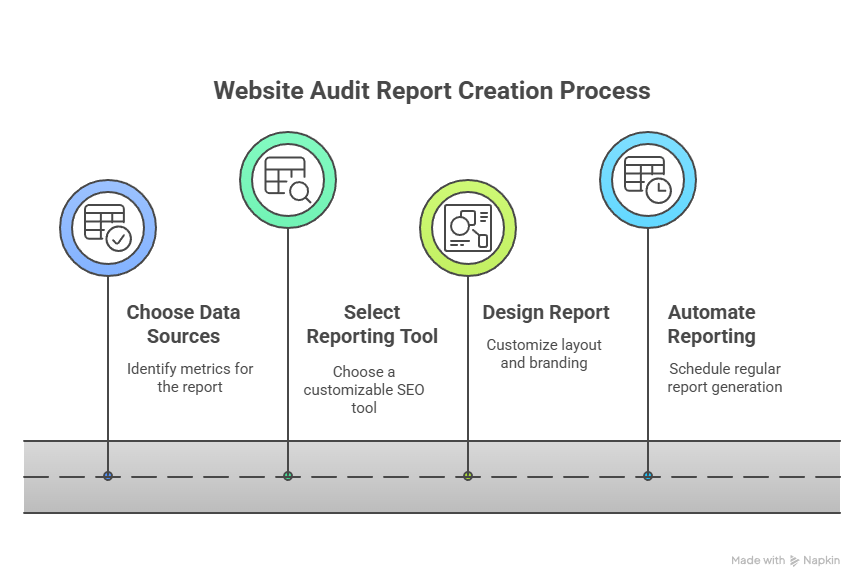
Then the work begins. Technical fixes get implemented. Content gets written and published. Links get built. On-page elements get optimised. Throughout the month, the provider tracks rankings, traffic, and conversions.
At the end of the month, you get a report. Rankings, traffic, work completed, plan for next month. You review it, put your branding on it, and send it to your client. Done.
The whole point is that your client gets a professional SEO service, your agency gets the revenue and the credit, and the provider does what they’re good at without having to sell or manage the client. Everyone wins, as long as the work is solid. For agencies looking at white label SEO tools and software for auditing, that post walks through the tech side of how providers deliver the work.
White label SEO is a straightforward concept that gets complicated when agencies don’t do their homework. You know how it works, what the services look like, how to price it, and what to watch out for. The right partner won’t just deliver SEO. They’ll make your agency look good while doing it.
If you want to talk through whether white label SEO makes sense for your agency, we’re here. You know where to find us.