“I know I need digital marketing, but I have no idea what services I actually need or what they cost.”
An electrician in Brunswick said that to me while we were going through his website analytics. He had a decent business, steady word-of-mouth referrals, and a website that hadn’t been updated since 2019. He knew he was leaving money on the table, but every time he looked into digital marketing services, he got overwhelmed by the options and the jargon.
That confusion is intentional. A lot of agencies make digital marketing sound complicated because complexity justifies higher fees. The reality is simpler than they make it seem. This guide breaks down what digital marketing services in Melbourne actually include, what they cost, and which ones matter for your business.
For a bigger picture view of how these services fit together, our digital marketing company Melbourne guide covers the full landscape.
The core digital marketing services and what they do
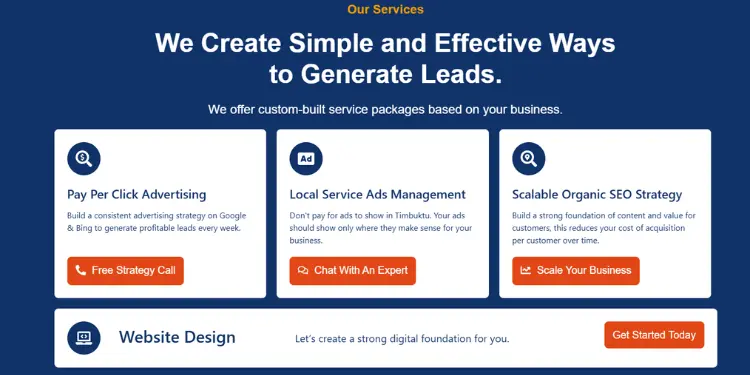
Digital marketing services fall into a handful of categories. Most Melbourne agencies offer some combination of these.
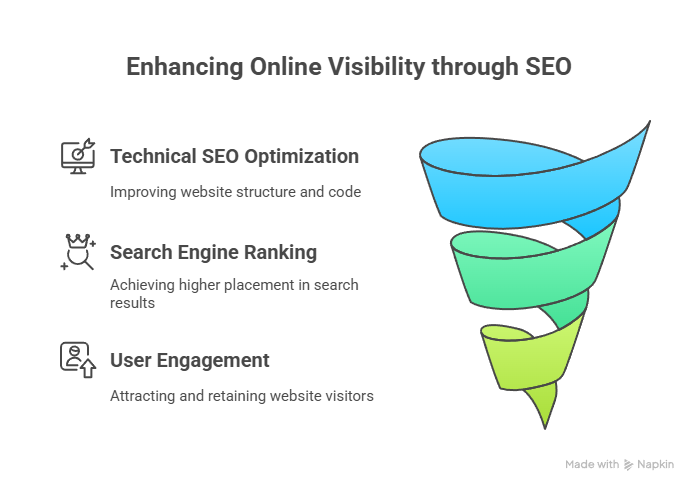
Search engine optimisation (SEO). This is about getting your website to show up when people search for what you offer. It involves fixing technical issues on your site, creating content that answers the questions your customers are asking, and building your site’s authority over time. It’s slow but it compounds. Our SEO services Melbourne guide goes into detail on what proper SEO looks like.
Local SEO. If your business serves a specific area, local SEO gets you into the map pack and local search results. That means optimising your Google Business Profile, building local citations, managing reviews, and making sure your name, address, and phone number are consistent everywhere. Our local SEO Melbourne guide covers the specifics.
Pay-per-click advertising (PPC). Google Ads, mostly. You pay every time someone clicks on your ad. It’s the fastest way to get traffic, but it stops the moment you stop paying. Good PPC management means getting the most leads for the least spend, not just running ads and hoping for the best.
Social media marketing. Creating and managing content on platforms like Facebook, Instagram, and LinkedIn. For most small businesses, the value here is in brand awareness and community building rather than direct sales. Organic social media reach has dropped significantly in recent years, so paid social is often necessary to get any traction.
Content marketing. Blog posts, videos, guides, email newsletters. Content that educates your audience and builds trust over time. It works hand in hand with SEO. The content brings people to your site, and the SEO makes sure they can find it.
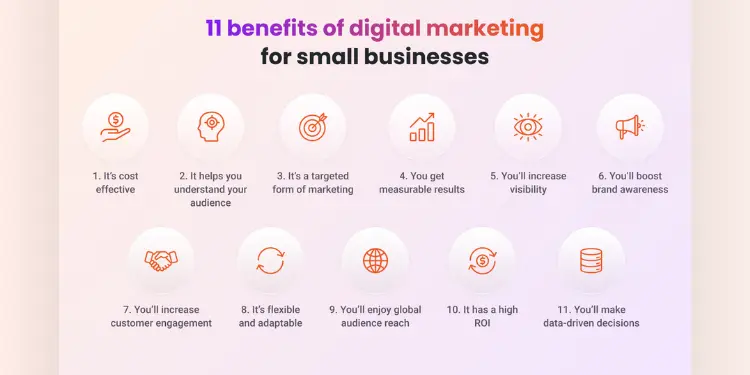
Email marketing. Building and nurturing a list of people who’ve given you permission to contact them. It’s one of the highest-ROI channels in digital marketing, and it’s often underused by small businesses.

Which services you actually need
Not every business needs every service. The right mix depends on where you are, what you sell, and how your customers find you.
If you’re a local service business like a plumber, electrician, or physiotherapist, your priority is local SEO and a website that converts visitors into phone calls. PPC can supplement that while you wait for SEO to build momentum.
If you’re an e-commerce business, your priorities are SEO, PPC, and email marketing. Social media helps with brand building, but it rarely drives direct sales for most small e-commerce operations.
If you’re a professional services firm like a lawyer or accountant, content marketing and SEO are your primary channels. Your clients are researching before they buy, and they want to see evidence that you know what you’re talking about.
The trap is signing up for everything at once. Start with the one or two channels that will have the biggest impact on your business right now. Get those working, then add more.
What digital marketing services cost in Melbourne
Pricing depends on the service, the scope, and the agency. Here’s a rough guide based on what I see in the Melbourne market.
SEO typically runs $1,000 to $3,000 per month for a small business. At that level, you should get technical fixes, content creation, and link building. Anything under $500 a month is likely not going to move the needle.
PPC management usually charges a management fee of 15 to 20 percent of your ad spend, or a flat monthly fee of $500 to $1,500. On top of that, you’ve got the actual ad spend itself.
Social media management ranges from $500 to $2,000 per month, depending on how many platforms and how much content you need. This typically includes content creation, scheduling, community management, and basic reporting.
Content marketing costs vary widely. A single blog post might cost $200 to $500. A monthly content package with four to eight posts, email newsletters, and social content might run $2,000 to $4,000.
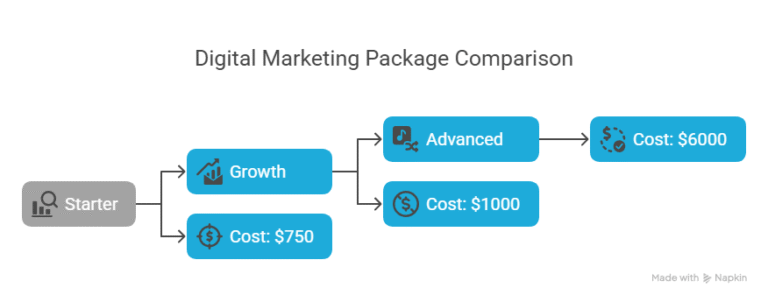
For a detailed breakdown of how agencies package these services, our digital marketing packages guide spells it all out.
How to tell if a service is working
Every digital marketing service should have clear metrics attached to it. If your agency can’t tell you exactly how they’re measuring success, that’s a problem.
For SEO, you’re looking at organic traffic growth, keyword rankings, and most importantly, leads or sales from organic search. Rankings without traffic are meaningless. Traffic without conversions is just expensive entertainment.
For PPC, track cost per lead, conversion rate, and return on ad spend. If you’re spending $2,000 a month on ads and generating $10,000 in revenue, that’s a good return. If you’re spending $2,000 and getting nothing, something needs to change.
For social media, measure engagement that leads somewhere. Profile visits, website clicks, direct messages that turn into conversations. Follower count by itself is a vanity metric.
For content, track how many people read it, how long they stay, and whether they take the next step. A blog post that gets 500 visits and generates 10 enquiries is worth more than one that gets 5,000 visits and generates nothing.
Common mistakes to avoid
The biggest mistake is spreading too thin. Doing five things poorly is worse than doing two things well. Pick your channels, commit to them for at least six months, and measure the results.
The second mistake is not tracking anything. If you don’t know what’s working, you can’t improve it. Make sure your website has analytics set up, your phone calls are being tracked, and your forms are connected to a CRM or at least a spreadsheet.
The third mistake is changing strategy every month. Digital marketing takes time. If you switch direction every four weeks because you haven’t seen results yet, you’ll never build enough momentum to see what works. If you’re not sure whether you need an agency or a consultant to manage these services, our consultant guide helps sort that out.
Where to start
If you’re not doing any digital marketing right now, start with the basics. Get your Google Business Profile set up and optimised. Make sure your website loads fast, looks good on mobile, and clearly tells people what you do and how to contact you. Then pick one channel and commit to it.
If you’re already doing some digital marketing but not seeing results, get an audit. A good consultant or agency will review what you’re doing, tell you what’s working and what isn’t, and give you a clear plan for what to do next.
Either way, you’ve got the information you need to make a smart decision. If you want someone to look at your situation and give you a straight answer, we’re here. You know where to find us.